Seize Every Moment

“So then, as we have opportunity, let us do good to everyone, and especially to those who are of the household of faith.” Gal 6:10

jwJohn Wesley’s Motto:

“Do all the good you can.
By all the means you can.
In all the ways you can.
In all the places you can.
At all the times you can.
To all the people you can.
As long as ever you can.”

Small Group Ideas for Summer Time

Small Group Ideas for Summer Time

Small Group Ideas for Summer Time

As Summer vacations start and kids are out of school, small group ministry can be challenging. Look for ways to stay connected to every member and reach out to those you have not seen in a while. Please don’t take the Summer “off” as you minister to your group. This can be a great time of ministry and connection with your class. Consider these ideas for Summer time ministry:

1. Pray for your group, calling each member by name before the Father.

2. Plan a summer fellowship for the group. Include kids and make it a fun time. Fellowship is a very important part of a small group ministry.

3. Spend some time every week talking about your member’s Summer plans. Let them know you will miss them while they are on vacation and you intend to see them when they come back.

4. Develop a weekly plan to contact absentees to check on them. Including other group members in the process is a great way to share your leadership responsibility with other members.

5. Plan a Summer mission project for the group and encourage each member to participate in the ministry opportunity.

Make a goal to contact every members on your list during the Summer. Summer is a great time to reconnect.

Arlington Cemetery – Changing of the Guard

The Changing of the Guard Ceremony at the Tomb of the Unknown Soldier at Arlington National Cemetery honors those who paid the ultimate price for our freedom whose bodies are not identified. The video below is a clip from the Stepping Up Bible Study – A Call to Courageous Manhood. It interviews some of the soldiers who bravely guard the tomb and the sacrifice they make. I highly recommend the Stepping Up Bible Study from Family Life. See samples of the Bible study at the link below.

ARVE Error: need id and provider

Stepping Up Channel on YouTube

Stepping Up – A Call to Courageous Manhood Official Site

Memorial Day – We Remember

Memorial Day – We Remember

3rd Infantry Places American Flags At The Graves Of U.S. Soldiers
Arlington National Cemetery Washington D.C.

This weekend we remember those who paid the ultimate sacrifice for our freedom. There are two places that I have personally visited that left a permanent  mark on my life. Arlington National Cemetery in Washington, DC and Normandy American Cemetery in Normandy, France. These two places are sacred reminders of the great price that was paid for our freedom. Each grave represents a life, a family, a story, and a sacrifice. What should our response be to their sacrifice?

  • Pray everyday for the United States of America giving thanks for those who serve, have served and gave their lives for our country.
  • Remember and honor their sacrifice, not just on Memorial Day, but everyday.
  • Dedicate yourselves to promote and protect this great democracy.
  • Look for ways to support and care for our veterans and service men.
  • Seek out ways to contribute to our great society and look to the needs of others.
  • Educate younger generations to appreciate and respect our great heritage.

Normandy
Normandy American Cemetery and Memorial, Normandy France

John Wesley’s Holy Club Questions

John Wesley’s Holy Club Questions

Recently I went through The 33 Series with a group of men. This was a challenging study that calls men to Authentic Manhood. During our small group discussion time, Dr. Rob Jackson mentioned the “Holy Club” that was begun by brothers John and Charles Wesley. Here are the questions:

In 1729, while John Wesley was a student at Oxford, he started a club with his brother Charles, which was mockingly dubbed “The Holy Club” by some of his fellow collegians. The club members rigorously self-examined themselves everyday by asking the following 22 questions:

1. Am I consciously or unconsciously creating the impression that I am better than I really am? In other words, am I a hypocrite?

2. Am I honest in all my acts and words, or do I exaggerate?

3. Do I confidentially pass on to others what has been said to me in confidence?

4. Can I be trusted?

5. Am I a slave to dress, friends, work or habits?

6. Am I self-conscious, self-pitying, or self-justifying?

7. Did the Bible live in me today?

8. Do I give the Bible time to speak to me every day?

9. Am I enjoying prayer?

10. When did I last speak to someone else of my faith?

11. Do I pray about the money I spend?

12. Do I get to bed on time and get up on time?

13. Do I disobey God in anything?

14. Do I insist upon doing something about which my conscience is uneasy?

15. Am I defeated in any part of my life?

16. Am I jealous, impure, critical, irritable, touchy or distrustful?

17. How do I spend my spare time?

18. Am I proud?

19. Do I thank God that I am not as other people, especially as the Pharisees who despised the publican?

20. Is there anyone whom I fear, dislike, disown, criticize, hold a resentment toward or disregard? If so, what am I doing about it?

21. Do I grumble or complain constantly?

22. Is Christ real to me?

These men were on to something powerful. They knew that the choices they make every day determine who they are and who they are becoming. This self-examination helped them “keep their heart-flames burning red hot for the King of Glory!”

Do you regularly evaluate your life and the condition of your heart?

Do you have someone in your life that you have given permission to ask you the hard questions of life?

National Day of Prayer

National Day of Prayer

From BGEA . . .

Billy Graham has said that the three most important things that one can do are: 1) Pray. 2) Pray. 3) Pray.

“When Paul said we should “pray without ceasing” (1 Thess. 5:17, NKJV) he chose a term used in his day to describe a persistent cough. Repeatedly, throughout our day, we should be turning quickly to God to praise and thank Him, and to ask for His help. God is interested in everything we do, and nothing is too great or too insignificant to share with Him.” (Billy Graham, Hope for Each Day)

On Thursday, May 2, people across the U.S. will join together to celebrate the 62nd annual National Day of Prayer, with the theme “Pray for America.”

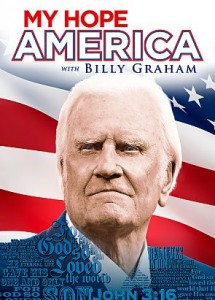
As My Hope America with Billy Graham continues to spread across the country, it is important to recall that prayer is the most crucial and basic element of the program. We hope that you will join us in praying for America on May 2. We encourage you to pray specifically for your neighbors and friends who don’t know Christ. Our nation needs to hear the Good News, and it is our prayer that the movement can begin through us as individuals committed to seeing our communities transformed with the Gospel.


Guided by God’s Word

Guided by God’s Word

Guided by God’s Word

2 Timothy 3:1-17

The Textbook of Sunday School (Small Group Bible Study) is the Bible, the Word of God. 2 Timothy 3:1-17 focuses on the importance of the Bible. What would our Small Groups be without the Bible as our focus? Would it be a support group, a civic club, a gathering of friends, or a prayer group? Even though a good Small Group will have some of these elements, the Bible is central to what a Small Group Bible Study is all about.

The Bible is not only our Textbook, It is the Test for the quality of our Christian walk. 2 Timothy 3:16-17 says, “All Scripture is inspired by God and is profitable for teaching, for rebuking, for correcting, for training in righteousness, so that the man of God may be complete, equipped for every good work.”

  • Teaching – divine instruction or doctrinal teaching
  • Rebuking – Reproof of wrong behavior or wrong belief
  • Correcting – The restoration of something to its proper condition
  • Training in Righteousness – Positive training in godly behavior.

These powerful aspects of the Bible lead to completeness and competence in the life of a believer.

If you are not committed to a small group of believers that meet weekly around the Word of God, let me encourage you to find a group and dig in. Your Christian walk will be greatly affected when you connect with other believers and connect with God, through His Word.

Follow Sound Doctrine

Follow Sound Doctrine

1-tim

Follow Sound Doctrine

There are many people giving and receiving advice today. In our culture, the idea of “coaching” is popular. People from every industry and station of life pay large amounts of money to their “coaches” to help them go to the next level. Through the study of the Scripture we can receive coaching that will encourage us to keep going, help us make course adjustments along the way, and take our place in God’s Kingdom for His glory.

God used the Apostle Paul to write a large amount of the New Testament. Paul was instrumental in spreading the Gospel about Jesus from Jerusalem to Judea and Samaria and ultimately to the ends of the earth. (Acts 1:8) The books of 1st and 2nd Timothy are personal letters to Timothy from the Apostle Paul. These books contain Paul’s counsel to Timothy concerning issues of church leadership. By reading and studying these books, we will receive “coaching” from the Apostle Paul himself that will inform, encourage and challenge us.

Toward the end of his life, Paul wrote three letters (1 and 2 Timothy, and Titus) to Timothy and Titus to instruct them as they continued in the work of the church. 1 Timothy 1:1-2 identifies the Apostle Paul as the author of this letter and his “son” in the faith, Timothy, as the recipient.

As a young leader, Timothy was prone to discouragement. Paul is writing to encourage him to stay on the job and fight the good fight. The presence of false teachers in the early church was one of the reasons that Paul encourages Timothy to stay strong and fight against error. Little has changed in the church since Paul wrote these words to Timothy. We have the same charge to fight the false teachers of our day.

The motivation of Paul’s command to fight against error is love. Paul writes, “The goal of this command is love, which comes from a pure heart and a good conscience and a sincere faith.” (1 Timothy 1:5) Paul has a genuine concern for those who have been deceived spiritually. A wrong understanding of the Old Testament Law is part of the false teaching. These false teachers were leading people to legalistic religion rather than a relationship with Christ. “The flesh loves religious legalism because rules and regulation enable a person to appear holy without really having to change his heart.” (New Testament Commentary, Warren Weirsbe) The Law is powerless to save. The purpose of the law is to reveal our need for a Savior.

Paul writes his personal testimony, describing the incredible work God has done in his life. It is not enough to fight false teaching, we must also proclaim the truth of the Gospel starting with our own lives. Paul summarizes the Gospel in one verse proclaiming the power of the Gospel, “Here is a trustworthy saying that deserves full acceptance: Christ Jesus came into the world to save sinners – of whom I am the worst.” (1 Timothy 1:15)

1 Timothy, chapter 1 ends with Paul charging Timothy to “fight the good fight” and hold on to his faith and not quit. It is always too soon to quit. The gospel and our spiritual lives are worth fighting for.

While reading and studying 1 Timothy 1 consider these questions:

1. Describe the most important letter or e-mail you every received.

2. How valuable is the content of the Bible in your life? If you did not have access to the Bible, how much would you pay to get it?

3. What are some of the false teachings of our day?

4. How does your testimony help you defend that which is true?

5. What can you do to strengthen your own understanding of the Scripture?

6. What will be the results of better understanding the Scripture?

7. If you could ask Paul any question, what would it be?

Ordination

Congratulation to Ryan Frontz, Todd Hickox, and Todd Villemont for their Ordination to the Gospel Ministry. I had the honor and privilege to minister to and along side these three men. Below is video testimony I taped for their ordination service:

ARVE Error: need id and provider
Living with Assurance

Living with Assurance

Living with Assurance

2 Peter 3:1-18

Assurance is hard to come by. We hope the economy will get better, but there is no guarantee. We hope for good health, but sickness comes. We hope our relationships will be strong, but many time we struggle and hurt those we care about. Some of the things we hope for either don’t happen or don’t happen on our time schedule. When Jesus was talking to His disciples about the hard times they would experience when He would be betrayed, falsely convicted, and killed on a cross He said, “I have told you these things, so that in me you may have peace. In this world you will have trouble. But take heart! I have overcome the world.” (John 16: 33) Jesus is our source of peace and hope. Peter was there when Jesus said those words. Now at the end of 2 Peter, he is writing as “reminders to stimulate you to wholesome thinking” and to remind them what the Word of God says (2 Peter 3:1-2). By searching and studying the Word of God, we can live with assurance that God is in control and hold the future in His hand.

Peter warns the reader that there will be “scoffers” in the last days. Scoffers are individuals who show contempt for the Word of God and the people of God. During the time of the writing of 2 Peter, these scoffers challenged the second coming of Jesus saying, “Where is this coming he promised?” (2 Peter 3:4) Peter is continuing to defend the faith and the Word of God and offers the answer to this question. He reminds the reader that God created the Heavens and Earth. He is in control of creation and sets the timeline of history by His pleasure and plan. Peter describes how this creation is being reserved for a day of judgment and will see the destruction of ungodly men.

These scoffers question God’s timing and the validity of the claim that Christ will come again. The way we experience time is different than the way God experiences time. Peter writes, “But do not forget this one thing, dear friends: With the Lord a day is like a thousand years, and a thousand years are like a day.” (2 Peter 3:8) This verse is sometimes used to interpret the length of days of the creation account in Genesis. In the context of this passage, Peter is not explaining the length of creation, but how God is above time. We live in the confinement of time, but God does not.

Peter then writes, “The Lord is not slow in keeping His promise, as some understand slowness. He is patient with you, not wanting anyone to perish, but everyone to come to repentance.” (2 Peter 3:9) Once Jesus comes again, the opportunity for people to repent of their sins and place their faith in Him will be over. For this reason, Peter writes about God’s patience with those who don’t know Him. Believers in Christ live to share the Gospel with a lost and dying world while looking forward to His coming.

Peter describes the “Day of the Lord.” New Testament writers used the term “Day of the Lord” to point to Christ’s final victory and the final judgment of sinners. (Holman Illustrated Bible Dictionary) Pastor Hank will be describing this day during his series through the book of Revelation.

Since this day of judgment is coming, Peter describes the kind of people we should be when he asks the question, “Since everything will be destroyed in this way, what kind of people ought you to be?” (2 Peter 3:11)

Peter answers this question:
Believers ought:

  • To live holy and godly lives. 2 Peter 3:11
  • Look forward to the day of God. 2 Peter 3:12, 14
  • Speed his coming by sharing the Gospel with all nations. 2 Peter 3:12
  • Make every effort to be found spotless, blameless and at peace with Him. 2 Peter 3:14
  • Be on your guard so that you may not be carried away by the error of lawless men. 2 Peter 3:17
  • Grow in grace and knowledge of our Lord and Savior Jesus Christ. 2 Peter 3:18

Peter’s love for the church is evident as he writes to “stimulate” the church to wholesome thinking and action. Relying on the Word of God leads to assurance that God is in control. His is neither early nor late. He is perfectly on time and His purposes and His people will endure whatever future holds.