John Wesley’s Holy Club Questions

John Wesley’s Holy Club Questions

Recently I went through The 33 Series with a group of men. This was a challenging study that calls men to Authentic Manhood. During our small group discussion time, Dr. Rob Jackson mentioned the “Holy Club” that was begun by brothers John and Charles Wesley. Here are the questions:

In 1729, while John Wesley was a student at Oxford, he started a club with his brother Charles, which was mockingly dubbed “The Holy Club” by some of his fellow collegians. The club members rigorously self-examined themselves everyday by asking the following 22 questions:

1. Am I consciously or unconsciously creating the impression that I am better than I really am? In other words, am I a hypocrite?

2. Am I honest in all my acts and words, or do I exaggerate?

3. Do I confidentially pass on to others what has been said to me in confidence?

4. Can I be trusted?

5. Am I a slave to dress, friends, work or habits?

6. Am I self-conscious, self-pitying, or self-justifying?

7. Did the Bible live in me today?

8. Do I give the Bible time to speak to me every day?

9. Am I enjoying prayer?

10. When did I last speak to someone else of my faith?

11. Do I pray about the money I spend?

12. Do I get to bed on time and get up on time?

13. Do I disobey God in anything?

14. Do I insist upon doing something about which my conscience is uneasy?

15. Am I defeated in any part of my life?

16. Am I jealous, impure, critical, irritable, touchy or distrustful?

17. How do I spend my spare time?

18. Am I proud?

19. Do I thank God that I am not as other people, especially as the Pharisees who despised the publican?

20. Is there anyone whom I fear, dislike, disown, criticize, hold a resentment toward or disregard? If so, what am I doing about it?

21. Do I grumble or complain constantly?

22. Is Christ real to me?

These men were on to something powerful. They knew that the choices they make every day determine who they are and who they are becoming. This self-examination helped them “keep their heart-flames burning red hot for the King of Glory!”

Do you regularly evaluate your life and the condition of your heart?

Do you have someone in your life that you have given permission to ask you the hard questions of life?
National Day of Prayer

National Day of Prayer

From BGEA . . .

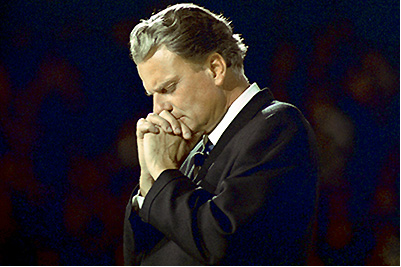
Billy Graham has said that the three most important things that one can do are: 1) Pray. 2) Pray. 3) Pray.

“When Paul said we should “pray without ceasing” (1 Thess. 5:17, NKJV) he chose a term used in his day to describe a persistent cough. Repeatedly, throughout our day, we should be turning quickly to God to praise and thank Him, and to ask for His help. God is interested in everything we do, and nothing is too great or too insignificant to share with Him.” (Billy Graham, Hope for Each Day)

On Thursday, May 2, people across the U.S. will join together to celebrate the 62nd annual National Day of Prayer, with the theme “Pray for America.”

As My Hope America with Billy Graham continues to spread across the country, it is important to recall that prayer is the most crucial and basic element of the program. We hope that you will join us in praying for America on May 2. We encourage you to pray specifically for your neighbors and friends who don’t know Christ. Our nation needs to hear the Good News, and it is our prayer that the movement can begin through us as individuals committed to seeing our communities transformed with the Gospel.


Guided by God’s Word

Guided by God’s Word

Guided by God’s Word

2 Timothy 3:1-17

The Textbook of Sunday School (Small Group Bible Study) is the Bible, the Word of God. 2 Timothy 3:1-17 focuses on the importance of the Bible. What would our Small Groups be without the Bible as our focus? Would it be a support group, a civic club, a gathering of friends, or a prayer group? Even though a good Small Group will have some of these elements, the Bible is central to what a Small Group Bible Study is all about.

The Bible is not only our Textbook, It is the Test for the quality of our Christian walk. 2 Timothy 3:16-17 says, “All Scripture is inspired by God and is profitable for teaching, for rebuking, for correcting, for training in righteousness, so that the man of God may be complete, equipped for every good work.”

  • Teaching – divine instruction or doctrinal teaching
  • Rebuking – Reproof of wrong behavior or wrong belief
  • Correcting – The restoration of something to its proper condition
  • Training in Righteousness – Positive training in godly behavior.

These powerful aspects of the Bible lead to completeness and competence in the life of a believer.

If you are not committed to a small group of believers that meet weekly around the Word of God, let me encourage you to find a group and dig in. Your Christian walk will be greatly affected when you connect with other believers and connect with God, through His Word.

Follow Sound Doctrine

Follow Sound Doctrine

1-tim

Follow Sound Doctrine

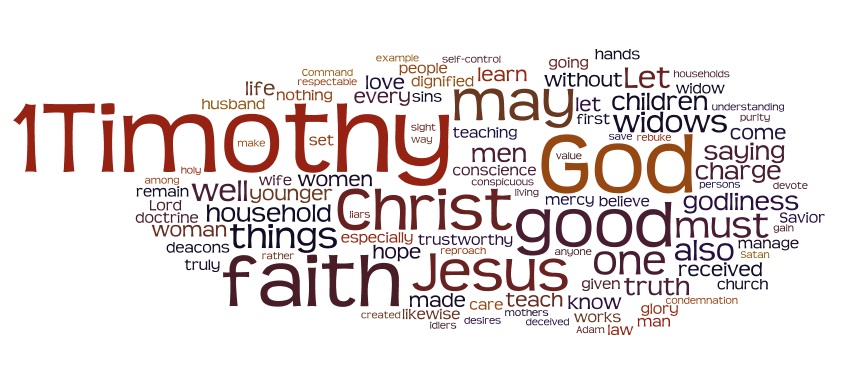
There are many people giving and receiving advice today. In our culture, the idea of “coaching” is popular. People from every industry and station of life pay large amounts of money to their “coaches” to help them go to the next level. Through the study of the Scripture we can receive coaching that will encourage us to keep going, help us make course adjustments along the way, and take our place in God’s Kingdom for His glory.

God used the Apostle Paul to write a large amount of the New Testament. Paul was instrumental in spreading the Gospel about Jesus from Jerusalem to Judea and Samaria and ultimately to the ends of the earth. (Acts 1:8) The books of 1st and 2nd Timothy are personal letters to Timothy from the Apostle Paul. These books contain Paul’s counsel to Timothy concerning issues of church leadership. By reading and studying these books, we will receive “coaching” from the Apostle Paul himself that will inform, encourage and challenge us.

Toward the end of his life, Paul wrote three letters (1 and 2 Timothy, and Titus) to Timothy and Titus to instruct them as they continued in the work of the church. 1 Timothy 1:1-2 identifies the Apostle Paul as the author of this letter and his “son” in the faith, Timothy, as the recipient.

As a young leader, Timothy was prone to discouragement. Paul is writing to encourage him to stay on the job and fight the good fight. The presence of false teachers in the early church was one of the reasons that Paul encourages Timothy to stay strong and fight against error. Little has changed in the church since Paul wrote these words to Timothy. We have the same charge to fight the false teachers of our day.

The motivation of Paul’s command to fight against error is love. Paul writes, “The goal of this command is love, which comes from a pure heart and a good conscience and a sincere faith.” (1 Timothy 1:5) Paul has a genuine concern for those who have been deceived spiritually. A wrong understanding of the Old Testament Law is part of the false teaching. These false teachers were leading people to legalistic religion rather than a relationship with Christ. “The flesh loves religious legalism because rules and regulation enable a person to appear holy without really having to change his heart.” (New Testament Commentary, Warren Weirsbe) The Law is powerless to save. The purpose of the law is to reveal our need for a Savior.

Paul writes his personal testimony, describing the incredible work God has done in his life. It is not enough to fight false teaching, we must also proclaim the truth of the Gospel starting with our own lives. Paul summarizes the Gospel in one verse proclaiming the power of the Gospel, “Here is a trustworthy saying that deserves full acceptance: Christ Jesus came into the world to save sinners – of whom I am the worst.” (1 Timothy 1:15)

1 Timothy, chapter 1 ends with Paul charging Timothy to “fight the good fight” and hold on to his faith and not quit. It is always too soon to quit. The gospel and our spiritual lives are worth fighting for.

While reading and studying 1 Timothy 1 consider these questions:

1. Describe the most important letter or e-mail you every received.

2. How valuable is the content of the Bible in your life? If you did not have access to the Bible, how much would you pay to get it?

3. What are some of the false teachings of our day?

4. How does your testimony help you defend that which is true?

5. What can you do to strengthen your own understanding of the Scripture?

6. What will be the results of better understanding the Scripture?

7. If you could ask Paul any question, what would it be?

Ordination

Congratulation to Ryan Frontz, Todd Hickox, and Todd Villemont for their Ordination to the Gospel Ministry. I had the honor and privilege to minister to and along side these three men. Below is video testimony I taped for their ordination service:

ARVE Error: need id and provider
Living with Assurance

Living with Assurance

Living with Assurance

2 Peter 3:1-18

Assurance is hard to come by. We hope the economy will get better, but there is no guarantee. We hope for good health, but sickness comes. We hope our relationships will be strong, but many time we struggle and hurt those we care about. Some of the things we hope for either don’t happen or don’t happen on our time schedule. When Jesus was talking to His disciples about the hard times they would experience when He would be betrayed, falsely convicted, and killed on a cross He said, “I have told you these things, so that in me you may have peace. In this world you will have trouble. But take heart! I have overcome the world.” (John 16: 33) Jesus is our source of peace and hope. Peter was there when Jesus said those words. Now at the end of 2 Peter, he is writing as “reminders to stimulate you to wholesome thinking” and to remind them what the Word of God says (2 Peter 3:1-2). By searching and studying the Word of God, we can live with assurance that God is in control and hold the future in His hand.

Peter warns the reader that there will be “scoffers” in the last days. Scoffers are individuals who show contempt for the Word of God and the people of God. During the time of the writing of 2 Peter, these scoffers challenged the second coming of Jesus saying, “Where is this coming he promised?” (2 Peter 3:4) Peter is continuing to defend the faith and the Word of God and offers the answer to this question. He reminds the reader that God created the Heavens and Earth. He is in control of creation and sets the timeline of history by His pleasure and plan. Peter describes how this creation is being reserved for a day of judgment and will see the destruction of ungodly men.

These scoffers question God’s timing and the validity of the claim that Christ will come again. The way we experience time is different than the way God experiences time. Peter writes, “But do not forget this one thing, dear friends: With the Lord a day is like a thousand years, and a thousand years are like a day.” (2 Peter 3:8) This verse is sometimes used to interpret the length of days of the creation account in Genesis. In the context of this passage, Peter is not explaining the length of creation, but how God is above time. We live in the confinement of time, but God does not.

Peter then writes, “The Lord is not slow in keeping His promise, as some understand slowness. He is patient with you, not wanting anyone to perish, but everyone to come to repentance.” (2 Peter 3:9) Once Jesus comes again, the opportunity for people to repent of their sins and place their faith in Him will be over. For this reason, Peter writes about God’s patience with those who don’t know Him. Believers in Christ live to share the Gospel with a lost and dying world while looking forward to His coming.

Peter describes the “Day of the Lord.” New Testament writers used the term “Day of the Lord” to point to Christ’s final victory and the final judgment of sinners. (Holman Illustrated Bible Dictionary) Pastor Hank will be describing this day during his series through the book of Revelation.

Since this day of judgment is coming, Peter describes the kind of people we should be when he asks the question, “Since everything will be destroyed in this way, what kind of people ought you to be?” (2 Peter 3:11)

Peter answers this question:
Believers ought:

  • To live holy and godly lives. 2 Peter 3:11
  • Look forward to the day of God. 2 Peter 3:12, 14
  • Speed his coming by sharing the Gospel with all nations. 2 Peter 3:12
  • Make every effort to be found spotless, blameless and at peace with Him. 2 Peter 3:14
  • Be on your guard so that you may not be carried away by the error of lawless men. 2 Peter 3:17
  • Grow in grace and knowledge of our Lord and Savior Jesus Christ. 2 Peter 3:18

Peter’s love for the church is evident as he writes to “stimulate” the church to wholesome thinking and action. Relying on the Word of God leads to assurance that God is in control. His is neither early nor late. He is perfectly on time and His purposes and His people will endure whatever future holds.

Living with Troublemakers by Standing on the Truth

Living with Troublemakers by Standing on the Truth

Living with Troublemakers by Standing on the Word of God

2 Peter 2: 1-22

Since the church began, there have been false teachers who would corrupt the church and the truth found in God’s Word. God’s Word is the standard by which one can confirm or reject the validity of spiritual teaching. Eternity for unbelievers and victorious living for believers hangs in the balance when truth is challenged by false teaching. The Apostle Peter wrote a strong rebuke to false teachers in 2 Peter chapter 2. He identifies the presence of false teachers, the content of their teaching, and describes the judgment that will come on them.

Peter starts this chapter by writing, “But there were also false prophets among the people, just as there will be false teachers among you” (2 Peter 2:1) He lets the reader know that false teachers exist and that the reader should beware. These teachers “secretly introduce destructive heresies”, and many will follow them and their teaching. Peter is issuing this strong warning to protect the reader from being captivated by these false teachers. The twisted truth of these false teachers is like a disease to the body. When false teaching is discovered, every means necessary must be taken to eliminate it so the body can return to health.

Throughout 2 Peter 3, Peter describes the content of the false teaching of his day.

False Teachers:

  • Deny the Sovereign Lord v. 1
  • Bring the truth into disrepute v. 2
  • Make up stories that exploit people v. 3
  • Follow the corrupt desire of the sinful nature v. 10
  • Despise authority v. 10
  • Slander celestial beings v. 10
  • Blaspheme in matters they do not understand v. 12
  • Carouse in broad daylight v. 13
  • Have eyes full of adultery v. 14
  • Seduce the unstable v. 14
  • Are experts in greed v. 14
  • Have left the straightway v. 15
  • Appeal to lustful desires v. 18
  • Promise freedom while they are enslaved by sin v. 19

This list from 2 Peter 1-20 demonstrates the condemning words that Peter used to describe these false teachers. Any teaching that is described by this list is false and should be rejected. The most powerful weapon against false teaching is the Word of God. It is central in determining truth and conduct.

Peter also describes the judgment that awaits false teachers. He writes, “Their condemnation has long been hanging over them, and their destruction has not been sleeping.” (2 Peter 2) Peter begins by giving Biblical examples of God’s judgment for false teaching and apostasy (2 Peter 2: 4-9) This passage describes how God judged the angels who sinned and rebelled against Him (2 Peter 2:4), the ancient world with the flood in Noah’s day (2 Peter 2: 5) and the city of Sodom and Gomorrah (2 Peter 2: 6-9). Peter also demonstrates how God is able to save the godly from these judgments when he writes, “if this is so, then the Lord knows how to rescue godly men from trials and to hold the unrighteous for the day of judgment, while continuing their punishment.” (2 Peter 2:9) God protects the godly, those who live according to His Word, while He judges the false, ungodly teacher.

Anyone who would endeavor to teach the Word of God and to lead people spiritually should pay close attention to 2 Peter 2. Consider the commitments a teacher of truth must make:

  • The Bible is God’s gift to the world and the source of truth
  • The Bible was written by men who were inspired by the Holy Spirit
  • The Bible is the inerrant Word of God
  • The Bible is the infallible Word of God
  • The Bible describes how one can know God and live for Him.
  • The Bible has God for its author, salvation for its end, and truth, without any mixture of error, for its matter. (Baptist Faith and Message)
  • The Bible is the source of Christian truth and teaching

A teacher who makes these commitments about the Word of God need not fear the judgment of false teachers. A teacher who stays close to the Word of God can confidently proclaim and teach truths found there in. Paul wrote these words to Timothy, “You then, my son, be strong in the grace that is in Christ Jesus. And the things you have heard me say in the presence of many witnesses entrust to reliable men who will also be qualified to teach others.” (2 Timothy 2: 1-2)

Living with Truth

Living with Truth

Living with Truth

2 Peter 1

Ever since the birth of the Church it has been under attack. Never in the history of the world has an institution been attacked more and yet survived and sometimes thrived. Even in our American culture Christianity and the Church are attacked with false prophets and twisted versions of truth. Where does a believer in Jesus Christ turn for answers for life and the church? God has given us the Word of God as our standard and source of truth. Many of the same battles we fight today for truth were present in the early church and addressed by the Apostles.

2 Peter is a letter to the early church written by the Apostle Peter.  In this letter, Peter describes some twisted versions of Christian truth that were being taught and straightens things out. It is important to have a proper understanding of Christian truth because it is out of our beliefs that we live our lives.

Peter begin this second letter by identifying himself and the recipients by writing: “To those who through the righteousness of our God and Savior Jesus Christ have received a faith as precious as ours.” (2 Peter 1:1) This letter was written to the church, those who have placed their faith in Jesus Christ. The church today can learn a great deal from 2 Peter.

Peter then describes how a believer can have confidence in their calling and election. In verse 3 Peter encourages the reader when he writes, “His divine power has given us everything we need for life and godliness through our knowledge of Him who called us by His own glory and goodness.” As believers in Jesus Christ we lack nothing that we need to live lives that honor God. We even participate in the “divine nature and escape the corruption in this world.” (2 Peter 1:4)

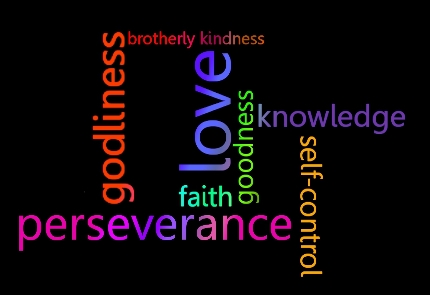
Peter then encourages the reader to make every effort to add to their faith virtues that demonstrate that they belong to Christ:

For this very reason, make every effort to add to your faith goodness; and to goodness, knowledge;
and to knowledge, self-control;
and to self-control, perseverance;
and to perseverance, godliness;
and to godliness, mutual affection;
and to mutual affection, love. (2 Peter 1:5-7)

A person that has these virtues present in their life can claim the promise in verse 8 that says, “For if you possess these qualities in increasing measure, they will keep you from being ineffective and unproductive in your knowledge of our Lord Jesus Christ.” This promise encourages believers to continue to grow in their faith and to live a life that honors God which lead to a productive effective faith.

Taking a personal inventory using this character traits can help identify areas of your life where there is growth and areas that need to be changed.

The second part of chapter 1 describes the source of prophecy that is found in the Scripture. Peter summarizes this passage in verses 20-21, “Above all, you must understand that no prophecy of Scripture came about by the prophet’s own interpretation. For prophecy never has its origin in the will of man, but men spoke from God as they were carried along by the Holy Spirit.” This creates the foundation for refuting the false teachers that are addressed in chapter 2.

The Bible is the inspired, inerrant Word of God. It was the source of truth for the early church and it is our source of truth today. “His divine power has given us everything we need for life and godliness through our knowledge of Him who called us by his own glory and goodness.” (2 Peter 1:3) “And we have the word of the prophets made more certain, and you will do well to pay attention to it, as to a light shining in a dark place, until the day dawns and the mourning star rises in your hearts.” (2 Peter 1:19)

Living in Humility

Living in Humility

Living in Humility 

1 Peter 5:1-7

As Peter finishes his letter of encouragement to the church, he encourages the leaders and young leaders to clothe themselves with humility. Peter describes his qualification to lead, the proper motivation for leadership, the reward of leadership, and an essential quality of leaders.

Before addressing the leaders of the church, Peter reminds them that he is a “fellow elder” who was a witness of Christ’s suffering and will share in the reward when Christ is revealed. Peter is reminding his readers of his qualifications to lead leaders. After establishing his leadership credentials, Peter describes the proper motivation for Christian leadership:

  • Christian Leaders must serve willingly by God’s leading, not out of man-made obligation. (1 Peter 5:2)
  • Christian Leaders must serve eagerly, not for monetary gain. (1 Peter 5:2)
  • Christian Leaders must serve by example, not attempting to manipulate others’ behavior. (1 Peter 5:3)
  • Christian Leaders who lead this way will receive an eternal reward (1 Peter 5:4)

Peter then tells the leaders to “clothe themselves with humility.” To clothe oneself is a deliberate act to put on clothing. Our daily routine involves putting on the clothing we will wear today, and there are choices that we must make. Should you wear warm or cold weather clothes? Does our day require more formal attire or casual? Will you need a change of clothes at some point during the day. These are all willful decisions about your clothing for any given day. In the same way, Peter tells his reader that they must “clothe themselves with humility.” They must deliberately put off pride and put on humility.

Humility is a personal quality in which an individual shows dependence on God and respect for others. Each person has a choice to make. Will they rely on themselves or will they rely on God? Peter quotes Proverbs 3:34, “God opposes the proud but gives grace to the humble.” The idea of humility is a foreign idea in popular American culture where being an independent individual is valued. The idea that you can be whatever you want to be based on your hard work and effort is a common life theme for many. A humble person is one who understands that for them to be all that God planned them to be, they must submit themselves to God and follow His Son, Jesus. Peter writes, “Humble yourselves, therefore, under God’s mighty hand, that He may lift you up in due time.” (1 Peter 5:6)

With leadership and life comes struggle and anxiety. Peter encourages the reader to, “Cast all your anxiety on Him because He cares for you.” (1 Peter 5:7) This is a great example of a person with the quality of humility present in their life. When anxiety comes, they give it to God, thereby showing their dependence on Him rather than relying on their own strength. Humble leaders with the right motivation for ministry are a powerful tool in the hand of God for His Kingdom.

Living in Faith

Living in Faith

Living in Faith 

1 Peter 4:12-19

All believers will endure suffering. The type of suffering Peter is describing in 1 Peter 4:12-19 is suffering for the cause of Christ. He helps the reader understand how to respond to suffering that comes into a believers life because they belong to Jesus.

Peter instructs the reader to expect painful trials and understand that trials are a part of the Christian’s life. When we can anticipate something, we can be ready when it comes and not be surprised. Our culture is turning more and more hostile towards Christians. As we see this developing in our society we can take measures to confront this hostility and ready ourselves for what is coming.

As these trials come, Peter tells us to rejoice. This seems counter intuitive on the surface. How can we rejoice when we experience trials for the sake of Christ. Peter mentions 4 reasons:

  1. We identify with the sufferings of Christ. (1 Peter 4:12)
  2. We will be rewarded when He returns. (1 Peter 4:13)
  3. The Spirit of Glory and of God rests on us. (1 Peter 4:14)
  4. These trials give us an opportunity to place our faith in God and commit ourselves to our Faithful Creator and continue to do good. (1 Peter 4:19)

In this passage Peter also encourages us to identify the cause of the trial we are under. He writes, “If you suffer, it should not be as a murderer or thief or any other kind of criminal, or even as a meddler.” 1 Peter 4:15) These sufferings give you the opportunity to examine your life:

  • Why am I suffering? (1 Peter 4:15) Ask yourself if you are the cause of the trial.
  • Am I ashamed of Christ or do I look for opportunities to praise Him? (1 Peter 4:16)
  • Do I look for opportunities to introduce people to Jesus? (1 Peter 4:17-18)

How strong is someone’s faith if it is never tested? God will use the trials of this life to strengthen us for His glory and our good.